Key takeaways
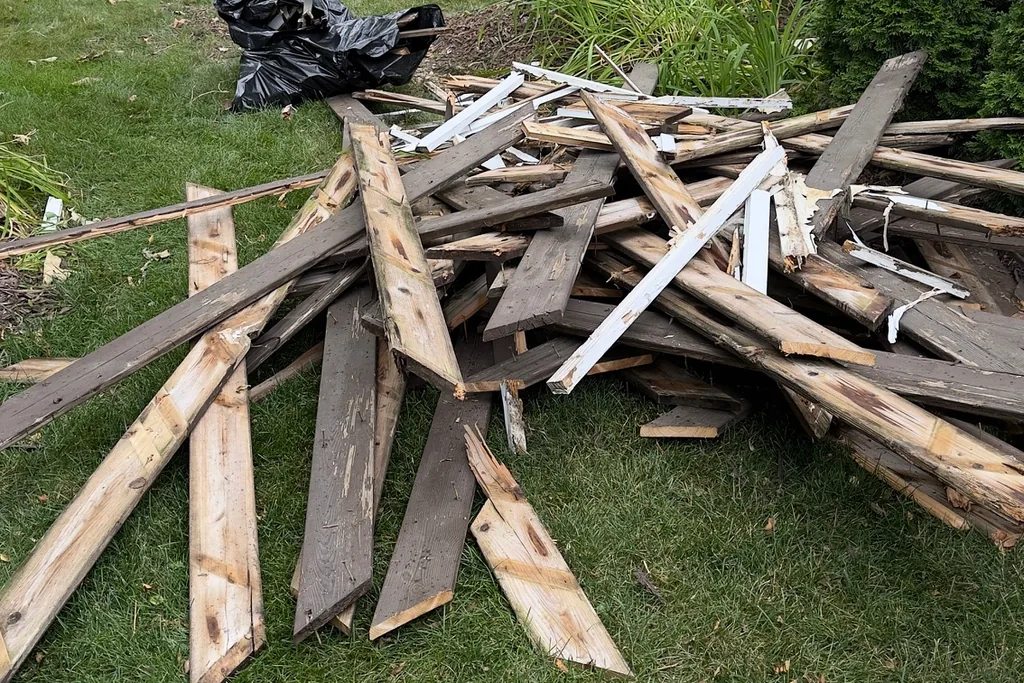
- A backyard pile of old boards, trim, and one contractor bag in Wheaton came in at a 1/4 truck load — $280 flat.
- The contractor's crew loaded, the truck pulled around back, and nobody inside the house was disturbed. Payment was by card on site.
- Loose boards look bigger on grass than in a truck bed — stacked flat, they compress, which keeps the tier down.
- Debris is priced by truck space, not hours. Only heavy materials like concrete and shingles are priced separately.
- A photo by text is usually enough to lock the tier before the truck rolls.
The job at a glance
This was a Sunday appointment in Wheaton, the DuPage County seat west of Chicago. A local home-improvement contractor had pulled a run of old boards and trim during a remodel and staged everything in the client's backyard. They needed it gone without a dumpster sitting on the driveway for a week. We're keeping the client and address private; here are the facts that matter for pricing.
| Detail | This job |
|---|---|
| Location | Single-family home, Wheaton, IL 60187 |
| Date | Sunday, September 27, 2026 (by appointment) |
| Client | Local home-improvement contractor, on behalf of the homeowners |
| Material | Weathered wood boards, broken white trim, one bagged load of scraps |
| Where it sat | Backyard lawn, reachable from the back of the property |
| Who loaded | The contractor's crew |
| Volume | 1/4 truck load (about 100 cu ft of a 400 cu ft truck) |
| Price | $280, flat — no hourly, fuel, or disposal add-ons |
| Payment | Credit card, on site, after loading |
The contractor's side: no dumpster, no disruption
The booking note was short and specific: the contractor's crew would load the debris themselves, we should pull around to the back, take a card for payment, and not bother anyone inside. That's a common request from remodelers working in occupied homes. The homeowners are living through the project, and the last thing anyone wants is another stranger knocking on the door.
For a contractor, a pile like this is dead weight on the schedule. Deck and remodel projects in Wheaton already run through the city's building permit and project guidelines, and nobody wants a debris pile still on the lawn when the inspector or the homeowner walks the yard. A roll-off dumpster solves the disposal, but it also means a delivery, a pickup, days of rental, and a steel box on the driveway. For a single pile, a one-visit haul is simpler.
Because everything was already outside, this was a textbook outdoor debris pickup: no stairs, no floor protection, no carrying through the house. Remodelers who deal with piles like this every month can set up junk removal for contractors and businesses, so the next pile is one text away and the billing lands on a single monthly invoice.
Our side: how dispatch sized it
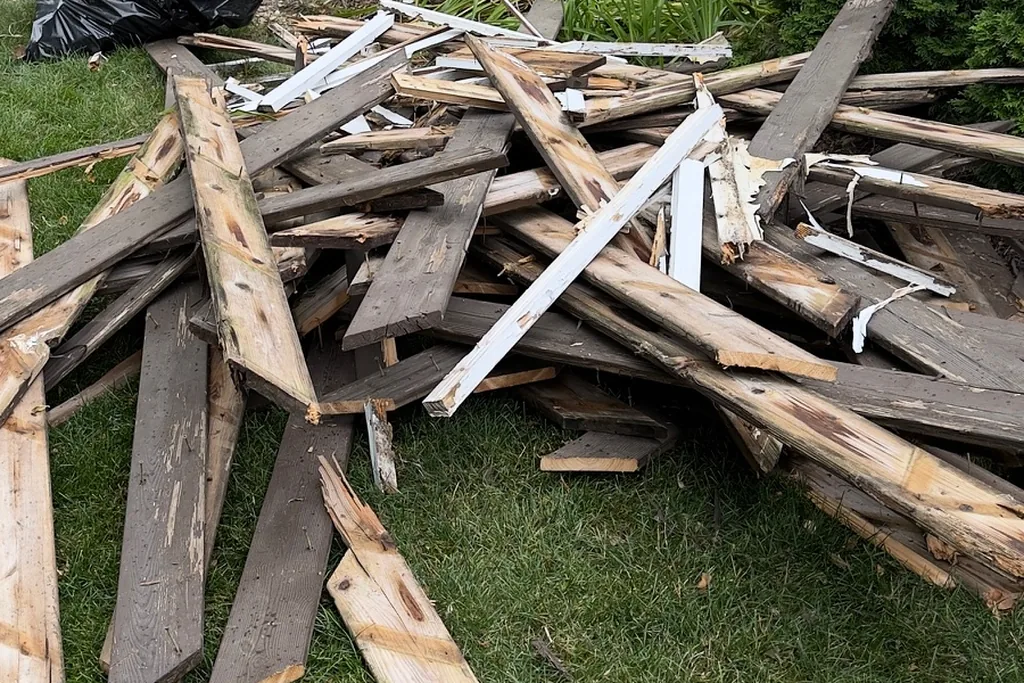
From the dispatch desk, jobs like this are about reading the pile correctly. Criss-crossed boards on a lawn look huge. There's a lot of air between them, the long pieces fan out, and a black bag on top makes it look like more. Once long boards are laid flat and stacked lengthwise in the bed, the same pile takes up far less space. That's why this load came in at a 1/4 tier and not a 1/2.
What we look for in a debris photo:
- Length and shape of the pieces. Long, flat boards stack tight. Chunky framing, cabinets, and odd shapes eat space.
- Heavy materials hiding in the pile. Concrete footings, tile, or shingles change the pricing, so we ask before we quote.
- Access. A pile in the backyard with a clear route to the truck loads fast. Here, pulling around back put the truck right next to it.
- Who's loading. When the client's crew loads, we plan the truck and the timing around them.
Once the tier is set, it's the price. That's the whole point of upfront truck-load pricing: the contractor knew the number before the truck arrived, and nothing changed when it left.
Pricing examples for construction debris loads
Every pile is different, but debris loads fall into the same five tiers as everything else we haul. Here's how our junk removal pricing tiers usually map to remodel and deck debris. Treat the right-hand column as a rough guide; a photo confirms the real tier.
| Truck load | Price | Typical debris at this size |
|---|---|---|
| 1/8 load (~50 cu ft) | $150 | A few dozen boards or fence pickets, or a handful of contractor bags |
| 1/4 load (~100 cu ft) | $280 | This job: a backyard pile of boards and trim plus one bag |
| 1/2 load (~200 cu ft) | $430 | A small deck surface tear-out, or one room of flooring, trim, and drywall scraps |
| 3/4 load (~300 cu ft) | $550 | A mid-size deck with railings and steps, or a kitchen tear-out without appliances |
| Full load (400 cu ft) | $650 | A larger deck including framing, or a multi-room remodel cleanup |
How does that compare to doing it through the city? Wheaton runs a special pickup for do-it-yourself construction debris, listed at $17 per cubic yard plus a $24 pickup charge. For a pile this size (roughly 3.7 cubic yards), that works out to about $85–$90. For a homeowner doing their own project who can bundle the material to the city's rules and wait for the pickup date, that's hard to beat. It's set up for DIY projects, though, and it runs on the city's schedule. When the debris comes from a contractor's job, the pile is loose, or it needs to be gone this weekend, a private haul is the practical option.
Want a number for your own pile before you call? The junk removal cost calculator lets you list what's there and shows the tier in about a minute, no email needed.
Got a debris pile waiting on a lawn or driveway? Itemize it, see the tier, and lock the price before the truck rolls.
Build my quote →Where old boards end up
Wood is one of the biggest parts of the construction waste stream. According to the EPA's guidance on sustainable management of construction and demolition materials, clean wood can be recycled into engineered wood products, mulch, and compost. The key word is clean. Weathered boards mixed with painted trim, fasteners, and possibly pressure-treated lumber rarely qualify for those streams.
So we're straight about it: loads like this one mostly go to disposal. Anything metal that comes out during sorting gets recycled, and clean, unpainted lumber gets separated when there's enough of it to matter. We don't promise a "100% recycled" haul when the material doesn't support it. The full breakdown is in what happens to your junk after pickup.
Staging tips for a faster debris pickup
Whether you're a contractor or a homeowner finishing a weekend project, a few minutes of prep makes the pickup faster and the quote more accurate:
- Stage it where a truck can get close. Driveway, side yard, or near the alley beats the far corner of the lawn. Tell us if the truck should pull around back.
- Lay long boards in one direction. It makes the pile easier to read in a photo, and it loads faster.
- Bag the small stuff. Trim splinters, screws, and offcuts go in contractor bags so nothing gets left in the grass.
- Flag heavy materials. Concrete footings, tile, or shingles mixed into the pile need a heads-up so we bring the right truck.
- Don't burn it. Old deck boards are often treated lumber, and the EPA advises against burning CCA and other preservative-treated wood at home because of the toxic smoke and ash.
- Text a photo early. Photos sent before noon give dispatch the best shot at same-day junk removal when routes allow, even out in the western suburbs.
Heads up — heavy debris is priced differently
Truck-load tiers cover wood, drywall, trim, cabinets, and mixed remodel debris. Dirt, concrete, roofing shingles, gravel, and railroad ties are priced separately by bed-load volume, and we give you that rate in writing before any work starts.
Common questions
How much does construction debris removal cost in Wheaton, IL?
We price debris by how much truck space it fills: 1/8 load $150, 1/4 load $280, 1/2 load $430, 3/4 load $550, and a full load $650. The Wheaton job above, a yard pile of old boards, trim, and one contractor bag, was a 1/4 load at $280.
Heavy materials such as concrete, dirt, shingles, and gravel are priced separately by bed-load volume, and the rate is in writing before we start.
Can my own crew load the truck?
Yes. If your crew is already on site and would rather load, tell dispatch when you book and we'll put the truck right at the pile. The price is still set by the truck space the load fills, and you only pay once it's loaded and the area is swept.
Does the City of Wheaton pick up construction debris?
Wheaton offers a special pickup for do-it-yourself construction or demolition debris, listed at $17 per cubic yard plus a $24 pickup charge. It's designed for homeowner projects and has to be scheduled with the city, so check the city's garbage and recycling page for current rules.
For contractor-generated debris, tight timelines, or loose piles that aren't bundled, a private hauler usually makes more sense.
Do you take pressure-treated or painted wood?
Yes. Old deck boards, pressure-treated lumber, painted trim, and boards with nails still in them are all standard construction debris for us. Please don't burn treated wood to get rid of it.
We don't accept hazardous materials such as fuels, solvents, bulk wet paint, or asbestos.
Do I need to be home for a debris pickup?
No, as long as the pile is staged outside and we can reach it. We confirm the price by text or phone, load, sweep up, and collect payment by card after the job. On the Wheaton job above, nobody inside the house was disturbed at all.